25 November 2026
What Does Slaughterhouse Lung Scoring Reveal About Swine Respiratory Health?
Lung scoring at slaughter provides a practical way to measure respiratory health, including infections that may have gone unnoticed during the growing period.
Mycoplasma hyopneumoniae, the primary cause of enzootic pneumonia (EP), can produce characteristic lung lesions even when pigs show few clinical signs.
The Ceva Lung Program (CLP) uses a standardized methodology to evaluate several types of lesions:
-
EP-like lesions: Areas of cranioventral lung consolidation, commonly associated with Mycoplasma hyopneumoniae. Their prevalence and extent are assessed using a modified Madec scoring system that takes the relative size of each lung lobe into account.
-
Scarring: Fissures or residual lesions that may indicate previous enzootic pneumonia infections.
-
Cranial pleurisy: Inflammation of the pleura of the apical and cardiac lung lobes, potentially associated with Mycoplasma hyopneumoniae and secondary pathogens.
- Dorsocaudal pleurisy: Lesions strongly suggestive of previous Actinobacillus pleuropneumoniae infection, assessed according to their location and extent.
The resulting indicators describe both the proportion of affected lungs and lesion severity. The EP index summarizes the frequency and extent of EP-like lesions, while the dorsocaudal pleurisy index describes lesions suggestive of previous Actinobacillus pleuropneumoniae infections.
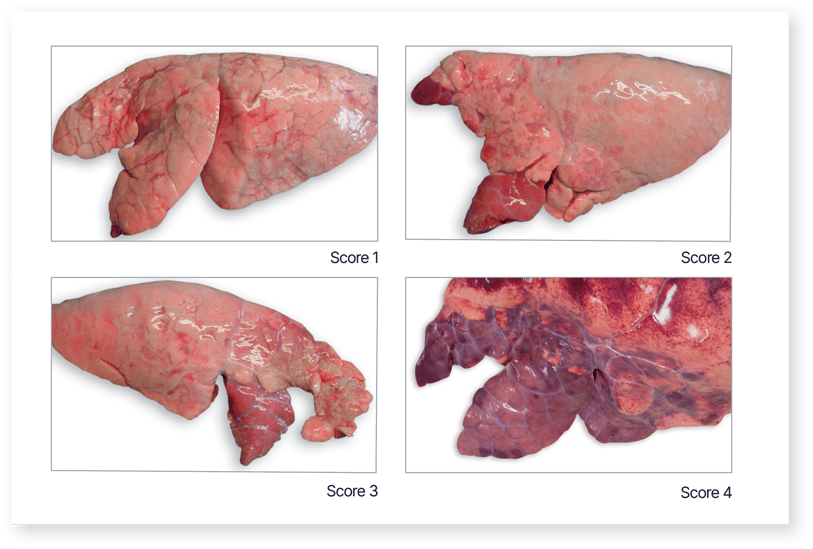
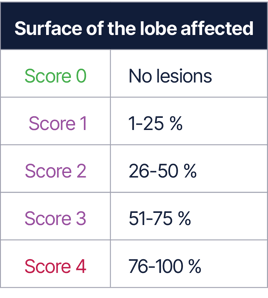
Figure 1: Scoring of bronchopneumonia lesions.
“If you cannot measure it, you cannot improve it.”
Through worldwide cooperation with pig producers and veterinarians, more than 10 million lungs have been evaluated using the Ceva Lung Program over the past decade.
In a 2025 European survey covering 384,190 lungs, the median proportion of lungs with bronchopneumonia-like lesions was 31.8%. However, results varied considerably between scoring sessions, with the first and third quartiles at 13.3% and 48.2%, respectively (Krejci et al., 2026).
These differences between the first and third quartiles show that lung scores still vary considerably between farms, highlighting opportunities to improve respiratory health.
Repeated lung scoring also makes it possible to follow trends over time, compare batches and benchmark results against other farms.
For more information about the lesions assessed, read Pulmonary lesions at the slaughterhouse: how to evaluate them.
How Do Swine Lung Lesions Affect Growth Performance?
Respiratory infections can reduce growth performance without causing obvious clinical signs. Lung lesions may therefore reveal production losses that would otherwise remain unnoticed.
Mycoplasma hyopneumoniae infections can follow a subclinical course. Pigs may show little coughing or no apparent respiratory distress, while lung damage continues to affect their growth potential.
A meta-analysis of eight field studies using the same lung scoring methodology confirmed an association between EP-like lesion scores and average daily gain (ADG). In comparisons between treatment groups, a median difference of 0.365 points in the EP index was associated with a 39 g/day difference in ADG (Krejci et al., 2022). This corresponds to approximately 11 g/day in ADG for a 0.1-point difference in the EP index in those comparisons. This correlation has been established within a range of prevalence and severity of lung lesions and must be assessed locally based on performances obtained in field trials.
These findings show why lung scoring should not be considered only as a diagnostic tool. It can also help estimate the potential economic consequences of respiratory disease.
By combining lung scoring results with growth performance, feed efficiency and other production indicators, it is possible to better assess the benefits of respiratory disease prevention strategies.
“Lung scoring can reveal hidden respiratory disease that may not be apparent from clinical signs.”
Reducing lung lesions is therefore relevant even on farms where respiratory signs appear well controlled.
To explore the evidence further, see the meta-analysis on lung lesion scores and average daily gain.
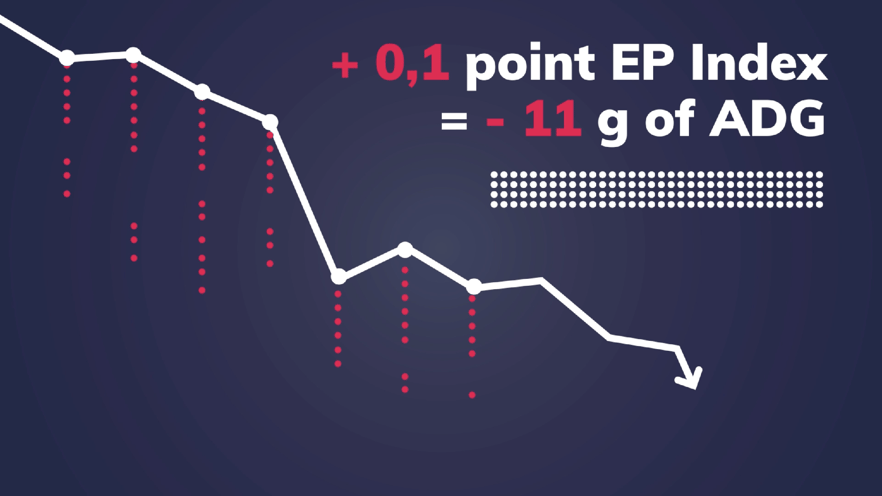
Figure 2: Association between EP-like lesion scores and average daily gain (ADG)
Can Swine Lung Lesions Alone Identity Respiratory Pathogens?
Lung lesions provide valuable information about respiratory health, but their appearance does not always identify the responsible pathogens with certainty.
Porcine Respiratory Disease Complex (PRDC) is multifactorial. Several bacterial and viral agents may contribute to respiratory problems, often through co-infections.
These include Mycoplasma hyopneumoniae, PCV2 (porcine circovirus type 2), porcine reproductive and respiratory syndrome virus (PRRSV), swine influenza A virus (swIAV), and Actinobacillus pleuropneumoniae.
For example, although cranioventral lung consolidation is commonly associated with Mycoplasma hyopneumoniae, similar lesions may also be caused or complicated by other respiratory pathogens.
Some infections, particularly subclinical PCV2 infections, can also be difficult to identify from clinical observations or macroscopic lung lesions alone.
“Could PCV2 contribute to the respiratory problems seen on your farm, even when pigs are already vaccinated?”
This question matters because PCV2 can continue to circulate subclinically, including in vaccinated piglet populations, without necessarily causing clinical disease. Subclinical PCV2 infections may be associated with an average daily gain reduction of approximately 10-40 g/day (Segalés and Sibila, 2022).
To better understand the underlying causes of respiratory disease, lung lesion assessment should be complemented by appropriate laboratory investigations.
Molecular laboratory diagnostics, particularly PCR (Polymerase Chain Reaction), provide additional information. PCR is a molecular biology technique used to amplify and detect a specific DNA sequence in a sample, even when only very small quantities are present. However, detecting a pathogen does not automatically demonstrate that it caused the observed lesions. Results must always be interpreted alongside clinical history, pathological findings and herd performance.
For further information, see The importance of pathology in swine diagnostics.
How Does CLP+ Combine Lung Scoring and PCR to Detect PCV2?
CLP+ (Ceva Lung Program Plus) is a comprehensive diagnostic approach combining slaughterhouse lung examination with multiplex PCR to investigate the main pathogens associated with Porcine Respiratory Disease Complex (PRDC).
This approach goes beyond traditional lung scoring by linking macroscopic lesions to the presence or absence of respiratory pathogens commonly involved in PRDC.
Following standardized CLP scoring, up to five lungs showing relevant lesions are selected from each batch. Tissue samples are taken at the transition between affected and healthy lung tissue, pooled and submitted for PCR analysis.
The approach targets PCV2, Mycoplasma hyopneumoniae, PRRSV, and Actinobacillus pleuropneumoniae. Where appropriate, additional PCV2 genotyping provides information on circulating field strains.
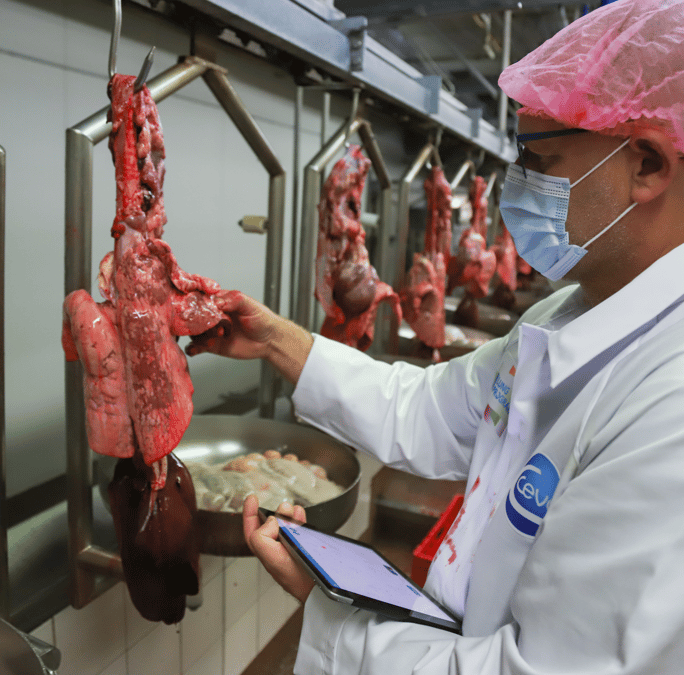
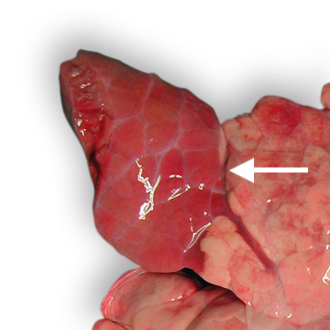
Figure 3: lung tissue sample was collected at the transition between altered and healthy tissue during CLP assessment.
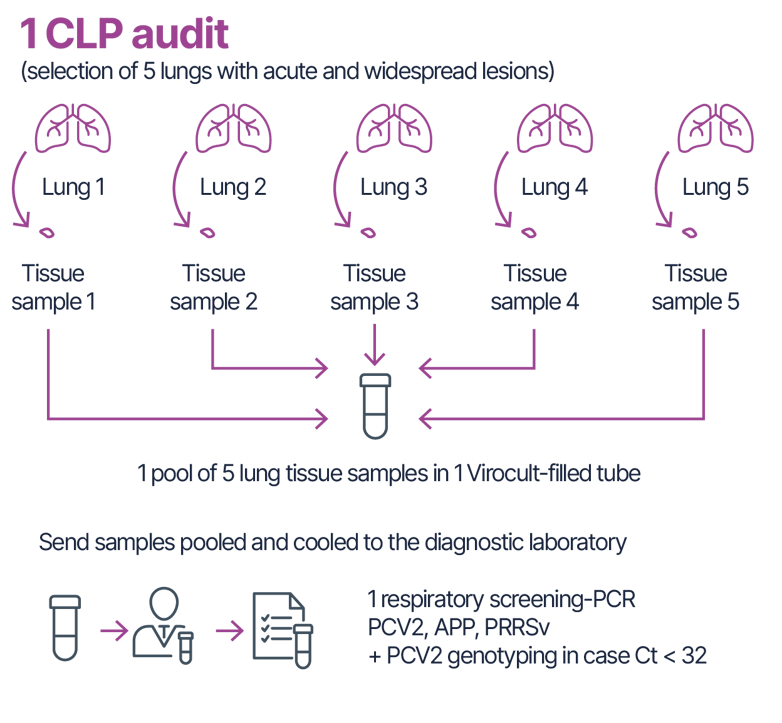
Figure 4: CLP+ workflow
What Did CLP+ Reveal About PCV2 and Other Respiratory Pathogens in European Pig Farms?
A large field study conducted in 2025 on 459 farms in Germany, the Netherlands, Belgium and Austria found that:
- PCV2 was detected on 49% of farms.
- PRRSV-1 was detected on 36% of farms.
- Actinobacillus pleuropneumoniae was detected on 9% of farms.
- Among the 91 farms with PCV2 sequences available, PCV2d genotype accounted for 80% of the identified genotypes.
A high proportion of lungs exhibiting lesions suggestive of enzootic pneumonia tested positive for Mycoplasma hyopneumoniae, highlighting the strong association between these lesions and the detection of this pathogen. Co-detections were also common. Mycoplasma hyopneumoniae and PCV2 were the most frequently detected pair, reported on 97 farms (Cvjetkovic et al., IPVS 2026).
These findings highlight the value of looking beyond the most obvious respiratory pathogens and demonstrate how CLP+ can identify potentially overlooked infections and support evidence-based prevention decisions, particularly when hidden, subclinical PCV2d circulation is suspected.
How Can Lung Scoring and PCR Results Guide Herd Health Decisions?
Better respiratory diagnostics help farmers and veterinarians move from identifying problems to choosing, implementing and evaluating appropriate prevention strategies.
Lung scoring makes it possible to monitor changes in respiratory health, evaluate the effects of management or vaccination interventions, and identify opportunities for improvement.
Adding pathogen detection through CLP+ provides a deeper understanding of the respiratory health situation on each farm.
For example, identifying PCV2 circulation together with Mycoplasma hyopneumoniae may prompt a reassessment of existing prevention strategies for these two pathogens.
Vaccination remains essential for controlling porcine circovirus diseases and enzootic pneumonia. However, vaccination decisions should be supported by field evidence and combined with appropriate management and biosecurity practices.
What Are the Alternatives When Slaughterhouse Lung Scoring Is Not Available?
Several alternative approaches are available:
- Oral-fluid respiratory screening: Detects major respiratory pathogens using oral-fluid samples collected on the farm.
- PCV2 viremia monitoring by blood qPCR: Provides another option for investigating PCV2 viremia and circulation, depending on the farm situation.
These approaches can be used separately or in combination to make hidden subclinical PCV2 circulation measurable, visible and actionable, depending on diagnostic objectives and practical circumstances.
The ultimate goal is not simply to obtain a positive or negative laboratory result. It is to turn diagnostic findings into better respiratory disease prevention, improved growth performance and more sustainable pig production.
Key takeaways
- Measure what matters: Standardized lung scoring quantifies the prevalence and severity of respiratory lesions, including those associated with potentially subclinical infections.
- Look beyond visible symptoms: Lung lesions may be associated with poorer growth performance even in pigs that appear healthy.
- Investigate hidden pathogens: Combining lung scoring with PCR investigation can reveal respiratory pathogens circulation, including PCV2 and particularly PCV2d, that might otherwise go unnoticed.
- Turn health data into action: Repeated assessments and pathogen detection support better-targeted prevention strategies and allow their effectiveness under real-life conditions to be followed over time.
Frequently asked questions
Can apparently healthy pigs have lung lesions?
Yes. Subclinical respiratory infections may cause lung lesions without noticeable coughing or respiratory distress. These lesions may be associated with reduced growth performance.
Does a positive PCV2 PCR result mean that pigs have PCV2-associated disease?
Not necessarily. PCR confirms detection of PCV2 genetic material, but additional clinical, pathological and epidemiological evidence is needed to establish its role in inducing the disease.
Can lung scoring help assess vaccination effectiveness?
Yes. Comparing standardized lung indicators before and after a vaccination strategy can provide useful field evidence, especially when combined with production data and other health indicators.
How can subclinical PCV2 circulation be investigated on a farm?
Several complementary approaches are available depending on the farm situation and access to sampling. CLP+ combines slaughterhouse lung examination with multiplex PCR on lung samples. Oral-fluid sampling offers an alternative where access to the slaughterhouse is difficult, while blood qPCR monitoring of PCV2 viremia remains another option. These methods can be used alone or in combination. Under the CLP+ protocol, in PCR testing, a lower cycle threshold (Ct) value indicates a higher amount of viral DNA in the sample. PCV2-positive samples with a Ct value below 32 may be sequenced to determine the circulating PCV2 genotype.
References
1. Krejci R., Dauvier A., Mazerolles P., Colin F. A Pan-European Assessment of Slaughterhouse Lung Lesions in Pigs: 2025 Survey Findings. Congress abstract, 2026.
2. Krejci R., Kalina J., Kuncová M. A Meta-Analysis of the Relationship Between Lung Lesion Scores in Slaughter Pigs and Their Daily Weight Gain. International Animal Health Journal, Vol. 9, No. 2, 2022.
3. Cvjetkovic V. et al. Updated Regional Assessment in Four European Countries of PRDC Pathogens Using Lung Lesion Scoring and Screening PCR. IPVS Congress, 2026.
4. Segalés J., Sibila M. Revisiting Porcine Circovirus Disease Diagnostic Criteria in the Current Porcine Circovirus 2 Epidemiological Context. Veterinary Sciences. 2022;9(3):110. https://doi.org/10.3390/vetsci9030110