6 November 2026
Introduction
Effective pig breeding management relies on careful planning and monitoring the reproductive cycle, from oestrus detection and insemination to gestation, farrowing and weaning [1]. Although pigs are generally considered nonseasonal and polyoestrous breeders, reproductive performance may still vary throughout the year [2, 3].
A pig breeding calendar provides a practical framework for organising these stages, linking insemination dates with expected farrowing and weaning periods. Together with accurate reproductive records, it supports the coordination of sow groups, housing availability and labour requirements, while helping producers monitor herd performance [1].
How Do You Detect Oestrus and Plan Insemination in Pigs?
In pigs, the oestrous cycle typically lasts around 21 days, with oestrus generally lasting 48–72 hours in sows and shorter period in gilts [4]. Beyond the timing of oestrus, reproductive management must also consider factors such as body condition and reproductive status, while the introduction of gilts into the herd requires particular attention to age, body weight and reproductive maturity, according to the genetic line and management conditions [3].
Alongside these considerations, accurate oestrus detection is essential for identifying the appropriate time for insemination. Physical and behavioural signs include vulval swelling and redness, restlessness and increased interest in the boar [4]. The most reliable indicator of sexual receptivity is the standing reflex, characterised by a firm, immobile stance in response to back pressure, particularly in the presence of a boar [4, 5]. Regular monitoring of these signs helps guide insemination timing, as ovulation generally occurs during the latter period of oestrus [4].
Artificial insemination is the predominant breeding method in commercial pig production, although natural mating is still used in some herds. Recording insemination or mating dates is essential for estimating the expected farrowing date and planning subsequent reproductive activities [3].
How Long Is Pig Gestation and How Do You Prepare for Farrowing?
The insemination date provides the basis for estimating the expected farrowing date, either by consulting a swine gestation table or by adding approximately 114 days. This traditional estimate, commonly expressed as “3 months, 3 weeks and 3 days”, is widely used for reproductive planning, although gestation generally lasts around 114–116 days, with individual and breed-related variation [3, 6]. The estimate can be adjusted according to the average gestation length recorded in the herd, helping producers plan reproductive monitoring and ensure that suitable farrowing accommodation is available when needed [3].
Pregnancy diagnosis by ultrasonography can generally be performed around 26–30 days after insemination. The absence of a return to oestrus approximately 18–24 days after insemination may also suggest pregnancy, although it does not provide definitive confirmation [4, 7].
Calculating the expected farrowing date*
|
Insemination date |
1 March |
|
Conventional planning estimate |
+114 days |
|
Estimated farrowing date |
23 June |
*Example based on a non-leap year. The estimated date is indicative and should be adjusted according to herd records.
Throughout gestation, appropriate feeding and body condition monitoring are important for maintaining sow health and preparing for farrowing [3]. As the expected date approaches, monitoring sow farrowing signs becomes increasingly important, alongside ensuring that the farrowing environment is ready [8].
Table 1. Recognising signs of approaching farrowing
|
Sign* |
What to observe |
|
Nest-building behaviour |
Rooting, pawing or manipulating bedding and surrounding materials. |
|
Restlessness |
Increased activity and frequent changes between standing and lying down. |
|
Udder development |
Enlargement and increased fullness of the mammary glands. |
|
Milk secretion |
Milk becoming visible or expressible from the teats as farrowing approaches. |
|
Vulval changes |
Swelling and relaxation of the vulva. |
*Signs may vary between animals and do not necessarily occur in the same sequence
What Happens During Farrowing, Lactation and Piglet Weaning?
Following farrowing, management focuses on the health and welfare of the sow and her piglets. Early access to colostrum is essential for newborn piglets, providing energy and maternal antibodies that support survival, immunity and development [9]. During lactation, adequate sow nutrition, water availability and regular monitoring of piglet growth are important for maintaining litter performance [3].
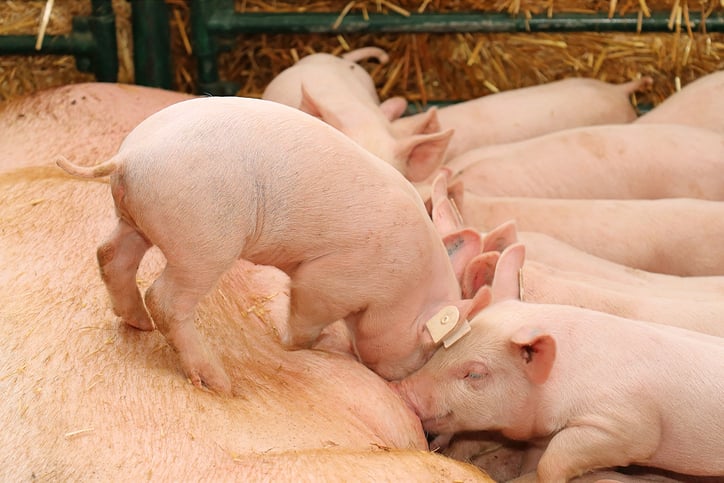
Recording the actual farrowing date helps producers schedule weaning and coordinate subsequent reproductive activities.
Piglet weaning age is a key consideration when planning the breeding calendar, as it influences piglet development and the timing of the sow's next reproductive cycle. Under Council Directive 2008/120/EC, piglets must not normally be weaned before 28 days of age, although earlier weaning is permitted under specific conditions [10].
Following weaning, most sows return to oestrus within 4–7 days, allowing the next breeding cycle to begin. However, the weaning-to-oestrus interval may vary according to factors such as parity, , lactation length, nutritional status and seasonal conditions [11].
How Can a Pig Breeding Calendar Improve Reproductive Herd Management?
Reproductive planning can be organised around the desired farrowing period, allowing producers to estimate the corresponding insemination dates and coordinate sow groups according to production objectives and the availability of farrowing accommodation. This helps support batch management and maintain an appropriate flow of animals through the herd [1].
Beyond scheduling, reproductive records provide a basis for evaluating herd performance. Indicators such as farrowing rate, weaning-to-oestrus interval and piglets weaned per sow per year allow producers to monitor reproductive efficiency and compare performance over time [1, 12]. Comparing planned dates with actual reproductive events can reveal delays or unexpected variation, allowing management practices to be reviewed when necessary.
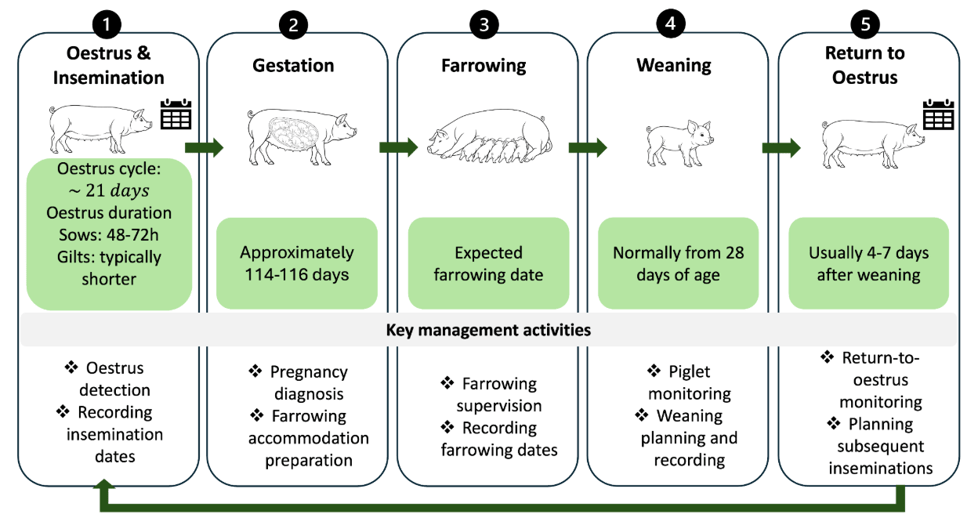
Figure 1. Pig breeding calendar: key reproductive stages and management activities
*Timings are indicative and may vary between animals and herds. Earlier weaning is permitted under specific conditions established by EU legislation.
Take-home messages
- Detect oestrus accurately. Regular monitoring of the standing reflex supports appropriate insemination timing.
- Record every insemination. Accurate dates are essential for estimating farrowing dates and planning reproductive activities.
- Prepare for farrowing. Use the expected farrowing date to organise accommodation and ensure that the necessary resources are available.
- Coordinate weaning and rebreeding. Record weaning dates and monitor the return to oestrus, usually within 4–7 days.
- Use records to improve herd performance. Monitor farrowing rate, weaning-to-oestrus interval and piglets weaned per sow per year.
References
[1] Koketsu, Y., Tani, S., & Iida, R. (2017). Factors for improving reproductive performance of sows and herd productivity in commercial breeding herds. Porcine Health Management, 3:1. DOI 10.1186/s40813-016-0049-7.
[2] Mpofu, T. J., Matukane, T. H., Modiba, M. C., Mpedi, H., & Idowu, P. A. (2026). Optimizing gilt development through integrated nutritional and health strategies: A narrative review. Open Veterinary Journal, 16(8), 5063–5076. https://doi.org/10.5455/OVJ.2026.v16.i8.4.
[3] Bortolozzo, F. P., Zanin, G. P., Ulguim, R. R., & Mellagi, A. P. G. (2023). Managing reproduction in hyperprolific sow herds. Animals, 13, 1842. https://doi.org/10.3390/ani13111842.
[4] Glencorse, D., Grupen, C.G., & Bathgate, R. (2025). A review of the monitoring techniques used to detect oestrus in sows. Animals, 15, 331. https://doi.org/10.3390/ani15030331.
[5] Hua, Z., Jiao, Y., Mao, A., Cuan, K., Wang, Y., & Wang, K. (2026). Monitoring of sows’ standing reflex during estrus based on machine vision. Agriculture, 16, 2176. https://doi.org/10.3390/agriculture16202176.
[6] Nowak, B., Mucha, A., Moska, M., & Kruszyński, W. (2020). Reproduction indicators related to litter size and reproduction cycle length among sows of breeds considered maternal and paternal components kept on medium-size farms. Animals, 10, 1164. DOI: 10.3390/ani10071164.
[7] Garbev, G., & Dimitrov, S. (2026). Early pregnancy diagnosis in sows: A comparative evaluation of ultrasonographic and progesterone-based methods. Life, 16, 854. https://doi.org/10.3390/life16050854.
[8] Theil, P. K., Farmer, C., & Feyera, T. (2022). Review: Physiology and nutrition of late gestating and transition sows. Journal of Animal Science, 100, 1-15. https://doi.org/10.1093/jas/skac176.
[9] Langendijk, P. (2025). Importance and control of colostrum intake in the neonate pig, a review. Reproduction in Domestic Animals, 60: e70077. https://doi.org/10.1111/rda.70077.
[10] Council Directive 2008/120/EC of 18 December 2008 laying down minimum standards for the protection of pigs. Official Journal of the European Union.
[11] EFSA AHAW Panel (EFSA Panel on Animal Health and Welfare). (2022). Welfare of pigs on farm. EFSA Journal, 20(8), 7421. https://doi.org/10.2903/j.efsa.2022.7421.
[12] Sanz-Fernández, S., Rodríguez-Hernández, P., Díaz-Gaona, C., Tusell, L., Quintanilla, R., & Rodríguez-Estévez, V. (2024). Evolution of sow productivity and evaluation parameters: Spanish farms as a benchmark. Vet. Sci., 11, 626. https://doi.org/10.3390/vetsci11120626.