14 October 2026
What makes a country influential in the global pig industry?
A country's influence depends on four factors:
- Production scale and efficiency: Large production volumes can significantly affect global pork supply, while productivity determines how effectively that scale is achieved;
- Export capacity: Export-oriented industries can influence international pork supply and trade flows;
- Import demand: Major import markets create substantial demand for international suppliers;
- Domestic consumption: Large consumer markets can affect production, imports and overall market demand [1, 2].
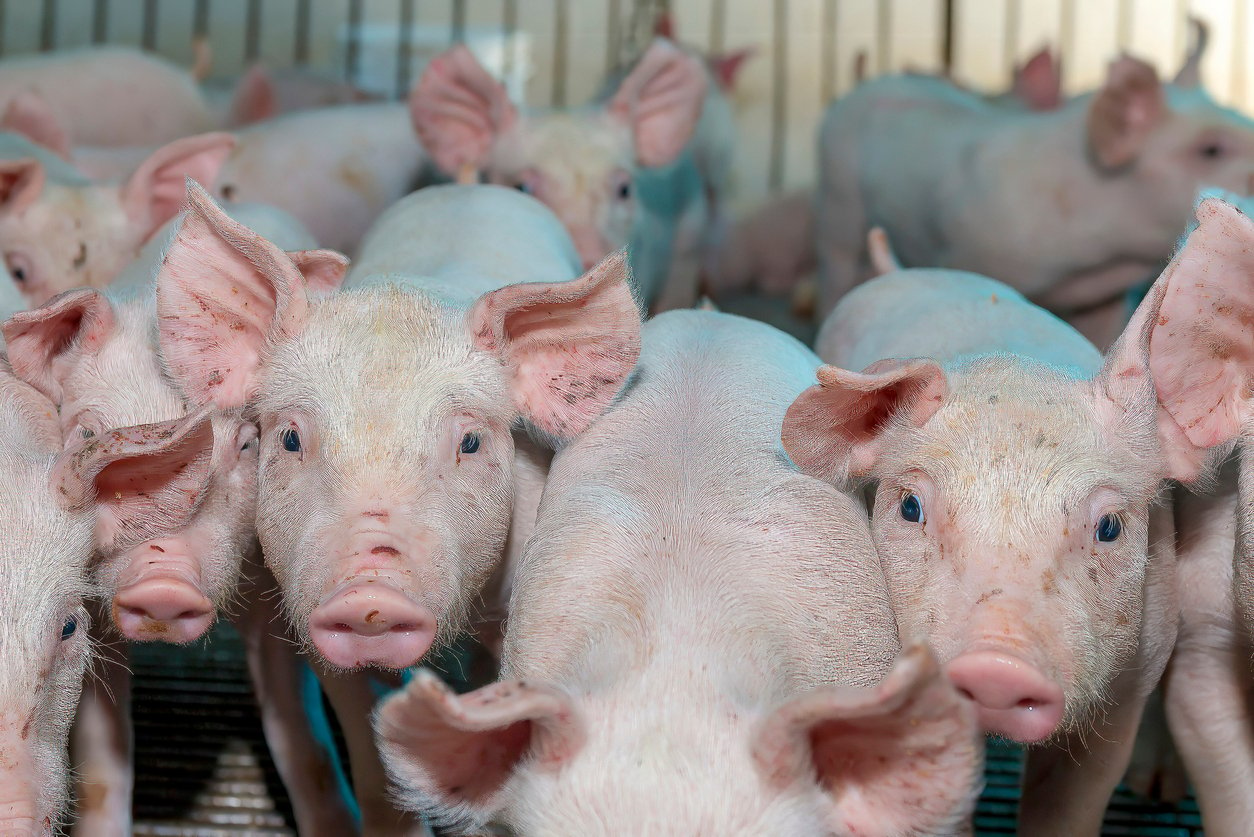
What are the 10 countries “shaping” the global pig industry
Considering the factors above and available data on pork production, exports and imports by country, 10 countries are proposed as shaping the global pig industry.
1. United States
The United States combines large-scale pork production with strong export capacity, making it one of the world's largest pork producers and exporters [2, 3, 4]. The US pork industry also benefits from domestic feed availability and efficient production systems [5]. Changes in U.S. trade policy can reshape the global pork market by altering international trade flows [6].
2. China
China's pork production is by far the world's largest, while the country is also one of the world's largest pork importers [3, 4]. Its scale of production and imports means that changes in domestic demand and policies can affect import requirements and global pork markets [1, 2].
3. Spain
Spain combines a significant production base with strong export orientation, making it one of the world’s largest pork exporters and producers [3, 4]. Its extensive presence in international markets means that changes in Spanish production and exports can affect international pork trade flows.
4. Germany
Germany is an important producer and trading country within the European pork industry. It is one of the world’s largest pork exporters, with established production and trade networks supporting its role in international pork flows [3, 4]. Its integration into the European market further connects German production and exports to pork supply across the region and beyond.
5. Brazil
Brazil combines a major pork production base with a growing role in international trade. Its expanding exports have strengthened its presence in South American and Asian markets, with Brazil increasingly diversifying its export destinations beyond China [2, 3, 4]. This combination of production scale and a widening export network is further increasing Brazil’s influence on international pork trade.
6. Canada
Canada combines a sizeable pork industry with a strong export orientation. Its access to international markets gives Canadian pork an important role in global trade, with a broad range of export destinations [4, 7]. Domestic feed production also supports the competitiveness of modern, intensive and integrated production systems [5].
7. Denmark
Denmark has a relatively small production base but is among the world’s top exporters [3, 4]. Its strong exposure to international markets has helped shape an industry where genetics, feed conversion, production efficiency and high-quality standards are central to meeting demanding export markets [8, 9].
8. Netherlands
The Netherlands also has a relatively small production base, but its highly export-oriented pig industry places it among the world’s top exporters. Its integration into European trade and access to markets such as China gives the country an important role in global pork flows [3, 4].
9. Japan
Japan represents a different source of influence: demand rather than production. Its large consumer market and reliance on imported products create sustained demand for international suppliers [10]. As the world’s largest pork importer, changes in Japanese demand can influence export opportunities and trade flows [4].
10. Mexico
Mexico is another major demand-driven market. It is one of the world’s largest pork importers, creating substantial demand for international suppliers and influencing international pork trade flows [4].
Vietnam and Russia are also among the world’s major pork producers, but their more limited role in international pork trade kept them out of the list [3, 4].
What the ranking shows
The ranking illustrates that influence in the global pig industry can come from different combinations of production, trade and demand.
- Scale matters: The United States and China demonstrate how large production bases can influence global pork supply. The United States combines this scale with high production efficiency and a strong export position, while China combines production scale with one of the world’s largest import markets;
- International trade can magnify a country's role: Denmark and the Netherlands demonstrate how strong export activity can connect relatively small production bases to global pork markets;
- Demand can shape trade: Japan and Mexico illustrate how large import markets can influence international pork flows by creating substantial demand.
The European Union collectively also plays an important role through its large production base, integrated market and extensive trade networks [2, 11].
Key Take-Home Messages
- Global pork influence extends beyond production scale. Countries such as the United States and Spain combine large production bases with strong participation in international pork trade, allowing their industries to influence markets beyond domestic consumption;
- Import demand can be a major source of global influence. Large consumer markets such as China, Japan and Mexico can shape international pork trade through their import demand;
- Strong export orientation can amplify influence. Denmark and the Netherlands have relatively small production bases but are among the world's top exporters, giving them an important role in international pork trade;
- Trade policies can reshape global pork markets. Changes in national policies can affect production, trade flows and market access [1, 2, 6].
References
[1] OECD/FAO (2026), OECD-FAO Agricultural Outlook 2026-2035, Paris and Rome,
https://doi.org/10.1787/47874669-en.
[2] USDA Foreign Agricultural Service (FAS). (2026). Livestock and Poultry: World Markets and Trade. U.S. Department of Agriculture, 9 April 2026. Livestock and Poultry: World Markets and Trade | USDA Foreign Agricultural Service
[3] FAOSTAT. Accessed: September 25th, 2026. FAOSTAT
[4] The Observatory of Economic Complexity (OEC). (n.d.). Pig Meat (HS: 0203) Product Trade, Exporters and Importers. OEC. Pig Meat (HS: 0203) Product Trade, Exporters and Importers | The Observatory of Economic Complexity
[5] See, M. T. (2024). — Invited Review — Current status and future trends for pork production in the United States of America and Canada. Animal Bioscience, 37(4), 775–785. https://doi.org/10.5713/ab.24.0055
[6] Shike, J. (2025, May 22). Tariffs disrupt global pork trade as disease risks rise. Pork Business. Tariffs Disrupt Global Pork Trade as Disease Risks Rise - Pork Business
[7] Agriculture and Agri-Food Canada. (2026). Red meat trade reports. Government of Canada. Agriculture and Agri-Food Canada — Red meat trade reports
[8] Agriculture & Food Denmark. (2025). Export report for the first half year 2025. https://agricultureandfood.co.uk/news-and-statistics/news/export-report-for-the-first-half-year-2025/
[9] Agriculture & Food Denmark. (2025). Danish pork is known for its high food safety, quality and consistency. https://agricultureandfood.co.uk/news-and-statistics/news/danish-pork-is-known-for-its-high-food-safety-quality-and-consistency/
[10] OECD (2025), Agricultural Policy Monitoring and Evaluation 2025: Making the Most of the Trade and Environment Nexus in Agriculture, OECD Publishing, Paris, https://doi.org/10.1787/a80ac398-en.
[11] European Commission: Directorate-General for Agriculture and Rural Development, Short-term outlook for EU agricultural markets in 2026, Publications Office of the European Union, 2026. Short-term outlook for EU agricultural markets in 2026 - Publications Office of the EU